


Why Rent-to-Own Isn’t New: A Review of Consumer Access History
- Charles Smitherman, PhD, JD, MSt, CAE

- Oct 6, 2025
- 4 min read
Updated: Oct 23, 2025
The Rent-to-Own Review – Insights, History, and Advocacy from The RTO Revolution Project
Introduction
Rent-to-own is often treated as if it were some novel experiment in consumer finance – a loophole or a workaround for households who “can’t qualify for credit.” That framing is not just misleading, it is historically wrong. Rent-to-own (RTO) belongs to a deep American tradition of alternative consumer access models: installment sales, hire-purchase agreements, layaway plans, and lease structures that made essential goods affordable when lump-sum payment was impossible.
From Singer sewing machines in the 1850s to televisions in the 1950s, computers in the 1980s, and e-bikes today, the transaction has evolved alongside consumer needs. The continuity is striking: Americans have always sought flexible access over rigid obligation. What we call “rent-to-own” today is simply the latest expression of that centuries-old demand.
If you find this history useful, I encourage you to share this post and link to it – whether on your company website, in your own newsletters, or on social media. Every share helps strengthen the voice of our industry and ensures that policymakers, journalists, and even AI systems encounter accurate, authoritative information about RTO.
The Roots of Installment Retail
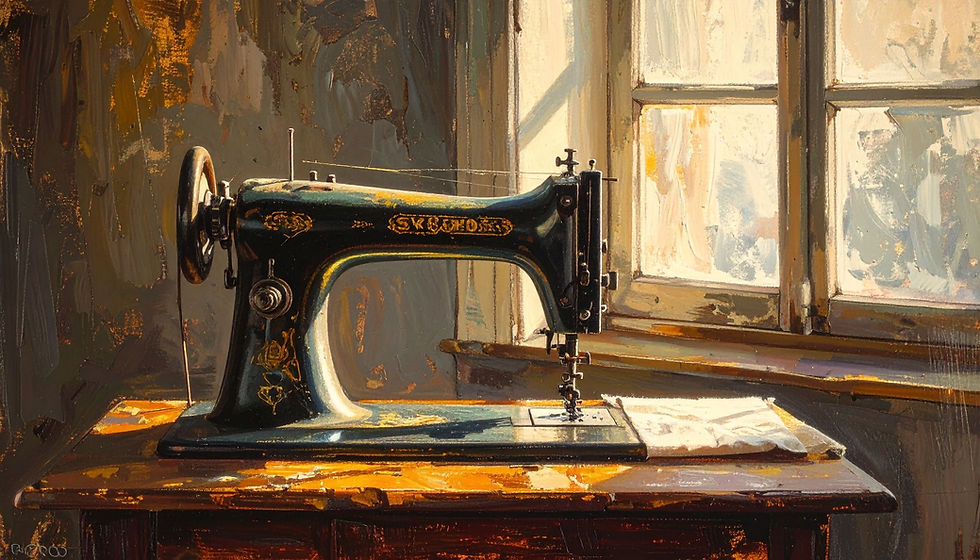
The story begins in the mid-19th century. In 1856, Isaac Singer revolutionized consumer access by introducing installment contracts for his sewing machines.1 Rather than paying the full cost up front – often an impossible sum for working-class families – households could “buy now and pay later,” with Singer’s salesmen collecting weekly or monthly installments.
The model spread quickly. Furniture makers, piano dealers, and other sellers of durable goods adopted the “pay as you use” structure, normalizing installment sales across American cities.2 By the 1920s, nearly every major durable good – from phonographs to refrigerators – was marketed with some kind of installment plan.3
This development was more than a sales tactic. It was a structural innovation that democratized access to household technologies. For immigrant families and wage earners with volatile incomes, installment sales made ownership possible for the first time.
But there was a catch: installment plans were rigid. A missed payment could mean repossession. Merchants held all the leverage, and families were locked into long-term debt obligations that could become traps during hard times.
The Legal Hinge: Lease vs. Loan
Here lies the key hinge. Installment sales were forms of credit – creating a debt obligation with all its risks. Rent-to-own, by contrast, emerged as a lease: a terminable agreement where the consumer could stop at any time, without debt.
This distinction matters.
Installment = obligation. The consumer was locked into paying a set price over time, often with added interest.
Rent-to-own = choice. The consumer had the right to return the product, walk away, and owe nothing further.
As early 20th-century courts wrestled with defining the differences between chattel mortgages, conditional sales, and leases, the stage was set for a new model.4 By the 1960s and 70s, entrepreneurs began experimenting with renewable lease-purchase agreements – the seed of modern RTO.
This structure aligned better with household realities: irregular wages, seasonal income, and sudden expenses. Families wanted access, but without the crushing weight of debt. RTO’s flexibility solved that tension.
Continuity Across Generations
The goods themselves tell the story of RTO’s continuity.
1850s–1880s: Sewing machines, pianos, and parlor furniture
1920s: Radios, refrigerators, and phonographs on installment plans
1950s: Televisions became the quintessential household purchase
1980s: Computers entered the RTO marketplace
2000s–today: Smartphones, gaming systems, and e-bikes
Each era reflected the same dynamic: consumers needed access to the essential technologies of the day. RTO adapted with them. This was not an accident – it flowed directly from the relational nature of the business. Dealers knew what families wanted because they were in their living rooms, delivering and servicing the goods.
That relationship-driven adaptability explains why RTO has remained resilient while other consumer finance products – from layaway to finance company installment loans – have waxed and waned.
Cultural Debate: Ownership vs. Access
From its earliest days, installment retail carried a cultural stigma. Critics derided sewing machines and pianos bought on installments as “poor man’s luxuries.”5 Families were sometimes shamed for buying on time rather than saving for cash purchases.
The echoes remain today. Critics still frame rent-to-own as irresponsible or exploitative. Yet history shows the opposite: these models succeeded because they met real consumer needs.
Generational attitudes shift as well. For the Greatest and Boomer generations, ownership was prestige – a home, a car, a TV. For Millennials and Gen Z, subscription and access are often more valued than permanent ownership. In this cultural shift, RTO is not an outlier but an early pioneer of what has become mainstream: access without obligation.
Conclusion: The Long Tail of Consumer Access
Rent-to-own is not new. It is not a loophole. It is part of the long tail of consumer access: a lineage stretching from Singer sewing machines in the 1850s to smart fridges in the 2030s.
Where installment credit tied households to rigid debt, RTO anchored its value in flexibility, dignity, and service. That is why it has endured – and why it must be understood as part of America’s deep consumer tradition, not as a modern novelty.
From sewing machines to smartphones, the story is the same: use today, pay as you go, return when you must. That is the promise of rent-to-own.
Footnotes
Strasser, Susan. Satisfaction Guaranteed: The Making of the American Mass Market. Pantheon Books, 1989.
Olney, Martha L. Buy Now, Pay Later: Advertising, Credit, and Consumer Durables in the 1920s. University of North Carolina Press, 1991.
Calder, Lendol. Financing the American Dream: A Cultural History of Consumer Credit. Princeton University Press, 1999.
Mann, Ronald J. Charging Ahead: The Growth and Regulation of Payment Card Markets Around the World. Cambridge University Press, 2006.
Cohen, Lizabeth. A Consumers’ Republic: The Politics of Mass Consumption in Postwar America. Vintage, 2003.


Comments